

Product
PRODUCT
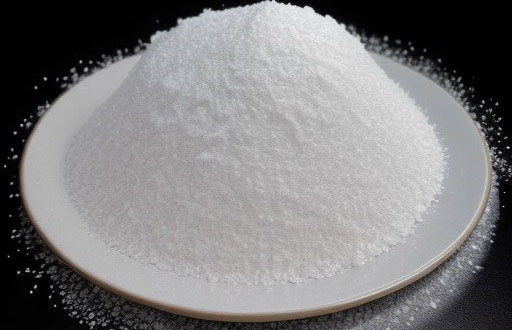
Styrene isoprene styrene block copolymer (SIS) is one of the main products of Shanghai Haihai Zhonglong Technology Co., Ltd. It is highly praised for its reliable quality, stable performance, and reasonable price. The manufacturer has sufficient supply. Please come here to learn more details, and contact 021-56070698 for procurement
Styrene isoprene styrene block copolymer (SIS) is a thermoplastic elastic rubber body with unique physical properties.
- FormSIS is a rubber like elastomer at room temperature, which can be plasticized and flow after heating.
- DensityThe relative density is close to 1, slightly heavier than water.
- SolubilitySIS is insoluble in water, but has a certain solubility in certain organic solvents.
- ElasticSIS has excellent elasticity and can maintain good elasticity even at low temperatures.
- ViscositySIS has strong adhesion and good adhesion to various materials.
SIS, as an important thermoplastic elastomer, has a wide range of applications in various fields. The following are its main uses:
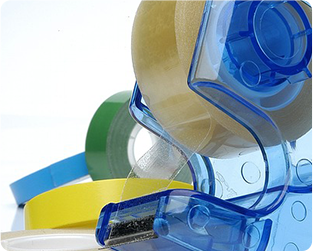 Hot melt pressure-sensitive adhesiveSIS is one of the main components of hot melt pressure-sensitive adhesive, which has good adhesion, heat resistance, and weather resistance. Widely used in the fields of labels, tape, double-sided tape, etc., it can be used for pasting and fixing various materials.
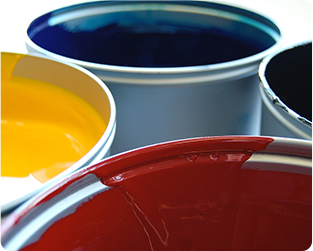 CoatingSIS can serve as a thickener, leveling agent, and adhesion promoter in coatings, improving the workability and coating performance of coatings. Suitable for coating various substrates, such as metal, plastic, wood, etc.
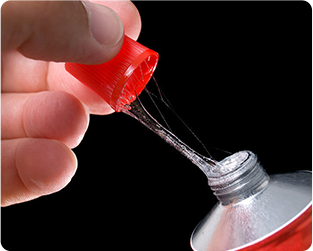 Solvent adhesiveSIS can be the main component of solvent based adhesives, with good initial adhesion and holding strength. Suitable for bonding various materials, such as paper, fabric, leather, etc.
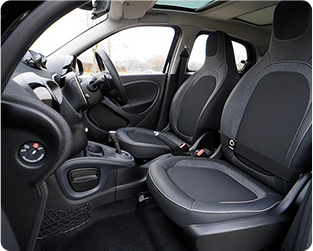 Plastic modified productsSIS can be blended with plastics to improve their processing performance, impact toughness, and weather resistance. Commonly used in the manufacturing of automotive bumpers, instrument panels, household appliances, and other products.
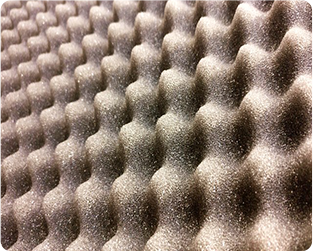 Other applicationsIn addition to the above applications, SIS can also be used to manufacture sealing materials, waterproof materials, sound insulation materials, etc. Its diversity and plasticity enable it to play an important role in various fields.
Differences from SBS:
(1) Adhesion: The main characteristic of SIS is its excellent adhesion performance, making it very suitable for making adhesives and pressure-sensitive adhesives. SBS has relatively weak adhesion.
(2) Application field: SIS is widely used in labels, tapes, and protective films, ensuring that products have long-lasting adhesive effects. SBS is more commonly used in shoe materials and asphalt modification, providing good wear resistance and resilience for shoe materials, while improving the performance of asphalt.
Differences from SEBS:
(1) Plastic modification ability: SEBS is mainly used for plastic modification, which can significantly improve the toughness, impact resistance, and low temperature resistance of plastics. In contrast, SIS has fewer applications in this area.
(2) Application field: SEBS has been widely used in the production of plastic products such as automotive parts, home appliance casings, and toys. SIS, on the other hand, focuses more on the production of adhesives and pressure-sensitive adhesives.
Differences from SEPS:
(1) Transparency: SEPS is particularly suitable for applications that require high transparency and can maintain product transparency. SIS is relatively weak in terms of transparency.
(2) Application areas: SEPS is used to make adhesive products such as transparent tapes and labels, as well as plastic products such as transparent packaging boxes and bottles. SIS is more commonly used in products such as labels and tapes that do not require high transparency.
Model | Structure | S/I Ratio(%) | SI content | Tensile strength Mpa | Hardness Shore A | MFR(g/10min,200℃,5kg) | 25℃、25%Toluene solution viscosity Mpa |
YH-1105 | Linear | 15/85 | 0 | 13 | 41 | 10 | 1250 |
YH-1106 | Linear | 16/84 | 16.5 | 12 | 40 | 11 | 900 |
YH-1124 | Linear | 14/86 | 25 | 10 | 38 | 10 | 1200 |
YH-1125 | Linear | 25/75 | 25 | 10 | 54 | 12 | 300 |
YH-1126 | Linear | 16/84 | 50 | 5 | 38 | 11 | 900 |
YH-1209 | Linear | 29/71 | 0 | 15 | 61 | 10 | 320 |
YH-4016 | Radial | 18/82 | 75 | 3 | 44 | 23 | 500 |
YH-4019 | Radial | 19/81 | 30 | 10 | 45 | 12 | 350 |